

Last Updated: November 10, 2026
Quick Summary
To verify high quality metal cutting dies, check the blade thickness, edge finish and listed dimensions against your cardstock before buying. Then test a die on two or three sheets of cardstock to confirm it cuts clean, repeatable shapes.
- Measure the die's outer size against your card base before you buy.
- Thin metal dies suit fine detail and standard cardstock, while steel-rule dies suit heavier material.
- Cut a test shape on cardstock, measure the opening and check for tears or thin spots.
- Confirm the die fits your machine's cutting plate and cartridge size before ordering.
- Wipe blades after use and store dies flat in a dry place to keep edges sharp.
Table of Contents
- What Makes Metal Cutting Dies High Quality
- Types of Metal Cutting Dies for Cards and Scrapbooking
- Carbon Steel and Other Die Materials
- Thin Metal Dies vs Steel-Rule Dies: Which Should You Choose?
- How to Verify Die Cut Dimensions Before and After Buying
- Die Cutting Machine Compatibility Explained
- How to Use a Cutting Die Step by Step
- Metal Die Cutting Tips and Troubleshooting
- Storing and Maintaining Your Dies So They Last
- Choosing Your Next Dies from The Crafty Canuck
- Frequently Asked Questions
What Makes Metal Cutting Dies High Quality
Metal cutting dies are only as good as the cuts they produce, and that comes down to precision, material and finish. Most buyers judge a die by its photo, but the real test is whether the blade cuts a clean line through cardstock and returns the same shape every time. This guide is designed to help you check those qualities before you spend money, not after.
A high-quality die starts with consistent steel thickness and sharp, evenly ground cutting edges. Look for dies that describe their blade construction and material clearly.
Dimensions matter just as much. A die that is even a millimetre off can leave gaps, tears or misaligned embossing. That is why verifying dimensions is the first step in choosing a good die, and the rest of this guide walks you through how to do it.
Types of Metal Cutting Dies for Cards and Scrapbooking
Craft dies are not a single product category. They differ in how the blade is formed, how the die is used in a machine, and what kind of cut they produce.
Frame dies cut a closed window or border. A rectangle or square frame is the workhorse of card making because the opening can hold a photo, a sentiment panel, or a background layer.
Shaped dies cut a single decorative element such as a flower, leaf, tag, or label. Because the blade path is more complex, shaped dies are where edge finish matters most.
Border and edge dies cut along one straight or decorative edge rather than enclosing a shape. Scalloped and stitched edges are common examples.
Steel-rule dies are built from a thicker blade bent into shape and set into a backing.
Thin metal dies are etched or cut from sheet steel and are flexible and lightweight. They suit delicate, detailed shapes and standard cardstock, and they store easily.
Embossing and combo dies cut a shape and press a raised pattern in the same pass.
A practical way to choose is to match the die type to your most common task. If you make cards, a few versatile frame dies plus two or three shaped dies will cover most projects.
Carbon Steel and Other Die Materials
Most craft dies are made from steel, and carbon steel is the common choice because it holds a sharp edge through repeated cuts. Carbon steel is harder than many alternatives, but it can rust if stored in a damp space, so storage matters as much as the material itself.
Some dies use thinner metal that flexes more, while heavier steel-rule dies resist bending. The right balance depends on your machine and the materials you cut. Check each product listing for the material and thickness, and compare those details before you buy.
Thin Metal Dies vs Steel-Rule Dies: Which Should You Choose?
The choice between thin metal dies and steel-rule dies comes down to three things: what you cut, how often you cut it, and what your machine can handle. Most buying guides stop at "thin is for detail, thick is for durability." The more useful comparison is mechanical.
Thin metal dies are made from sheet steel, often around 0.5 mm to 0.8 mm thick, with the cutting edge formed by etching or laser cutting. They are flexible, lightweight, and inexpensive to store.
Steel-rule dies are made from a thicker blade, typically 1 mm to 2 mm, bent into shape and embedded in a wood or plastic backing.
Plate configuration differs by type. Thin metal dies usually run in a simple sandwich: base plate, die, material, cutting plate.
Material thickness sets the practical limit. Thin metal dies suit paper and standard cardstock, while steel-rule dies are better suited to heavier material. If you regularly cut material thicker than standard cardstock, a steel-rule die is the safer choice.
Production-scale work changes the math. For crafters making a handful of cards, thin dies are cost-effective and space-efficient.
A simple decision rule: if your work is detail-heavy and low-volume, choose thin metal dies. If your work is shape-simple and high-volume, or uses heavier material, choose steel-rule dies.
Watch out: forcing a steel-rule die through a machine set up for thin dies is a common cause of bent blades and cracked cutting plates.
The two main formats differ in thickness, flexibility, detail and durability, as summarised below.
| Feature | Thin metal dies | Steel-rule dies |
|---|---|---|
| Blade thickness | About 0.5 mm to 0.8 mm | About 1 mm to 2 mm |
| Best for | Fine detail, standard cardstock | Heavier material, repeated runs |
| Edge life | Dulls faster under heavy use | Holds edge through more passes |
| Storage | Flexible, lightweight, easy to store | Thicker, takes more space |
| Plate setup | Simple sandwich | Often needs shim or adapter plate |
How to Verify Die Cut Dimensions Before and After Buying
Before buying, check the listed dimensions against the space you want to cut. Measure the outer size of the die and compare it to your cardstock, your card base and any frames you plan to use. A die that looks right on screen can still be too large for a standard card front.
After buying, verify the die again when it arrives. Compare the physical measurements with the listing and inspect the blade edges for burrs or damage. If the dimensions do not match, contact the seller promptly and keep your packaging.
Watch out: buying a die without measuring your card base is the most common cause of wasted cardstock, because an oversized die trims your design off the edge.
A Simple Die-Testing Procedure on Cardstock
You can test a die in about ten minutes with basic supplies. Cut a single sheet of cardstock with the die, then check the result in this order:
- Measure the cut opening with a clear ruler and compare it to the listed size.
- Look for clean, continuous lines with no tearing or thin spots.
- Cut a second sheet to see whether the result repeats.
- Fit a card panel or photo into the opening to confirm it sits snugly.
If the cut is consistent across two or three sheets, the die is performing as expected. Keep your test cards as a reference for future orders.
Die Cutting Machine Compatibility Explained
Not every die works with every machine. Most dies are designed for a specific cutting platform, and the cutting plate and cartridge sizes must match your machine. Check the listing for compatibility before you buy, especially if you use a larger or older model.
Machine pressure also affects results. A die cut that is too shallow may not separate the cardstock, while one cut too deep can tear thin paper. Adjust the pressure settings gradually and run a test cut before you cut a finished project.
How to Use a Cutting Die Step by Step
Using a die is straightforward once you have the right setup. Work through these steps for a clean result:
- Place the die on the cutting plate with the cutting edge facing up.
- Lay your cardstock or lightweight material on top, aligned with the die.
- Add the top plate and feed the stack through the machine.
- Remove the plate, peel back the cardstock and release the cut shape gently.
- Clean out any remaining paper bits from the die before storing it.
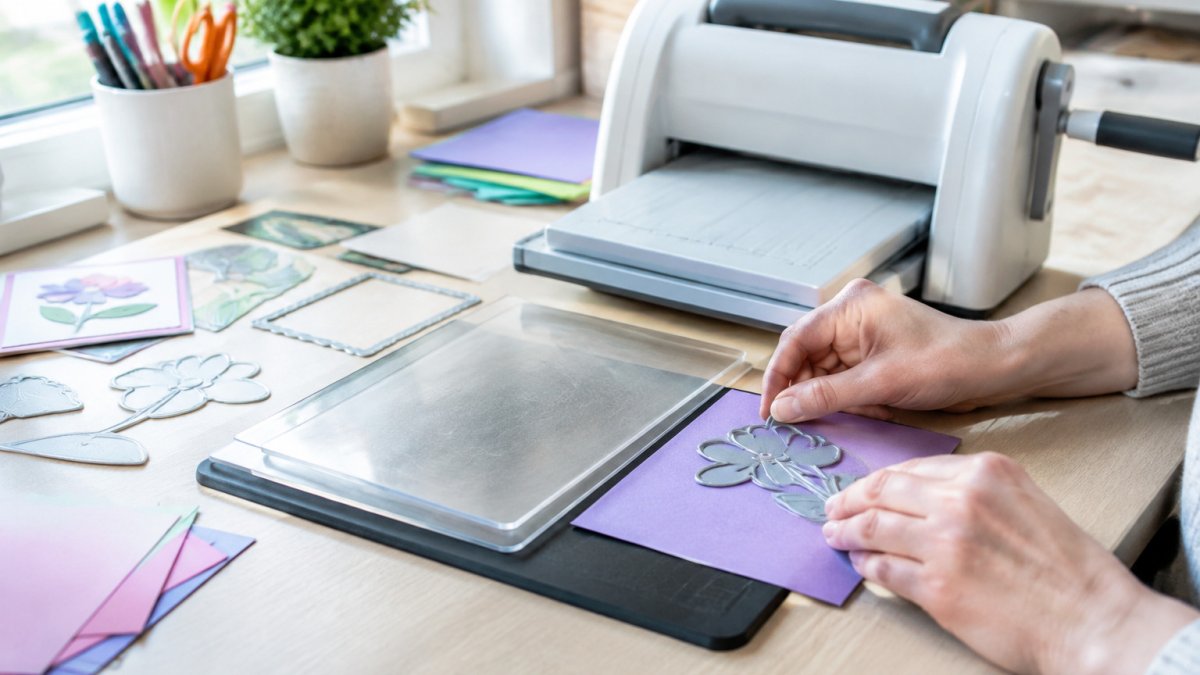
Cutting Paper, Cardstock and Lightweight Materials
Paper and cardstock are the most common materials for craft dies. Thin paper cuts easily but can tear if the pressure is too high, while heavier cardstock needs firmer pressure and a sharp die. Test your settings on scrap material first.
Lightweight materials such as vellum and thin foils need gentle handling. Support them with a backing sheet to prevent distortion during cutting.
Embossing and Adding Dimension
Many dies can also emboss, pressing a raised pattern into the paper without cutting through it. Embossing adds texture and depth to backgrounds, frames and florals. Use a sturdy die for embossing and a slightly lighter pressure than you would for cutting.
Metal Die Cutting Tips and Troubleshooting
If a cut looks incomplete, clean the die and check for trapped paper fibres, then run it again with slightly more pressure. If the paper tears, reduce pressure and confirm the cardstock weight matches the setting. Uneven cuts often point to a loose cutting plate or misaligned materials.
Keep a record of which settings worked for each material. Over time, that log saves you from repeating tests and helps you buy the right dies for your projects.
Storing and Maintaining Your Dies So They Last
Store dies flat or in a labelled case in a dry area away from moisture. Wipe the blades after use to remove adhesive residue and paper dust, and apply a light coat of protective oil if you live in a humid climate. Good storage protects your investment and keeps cuts sharp for longer.
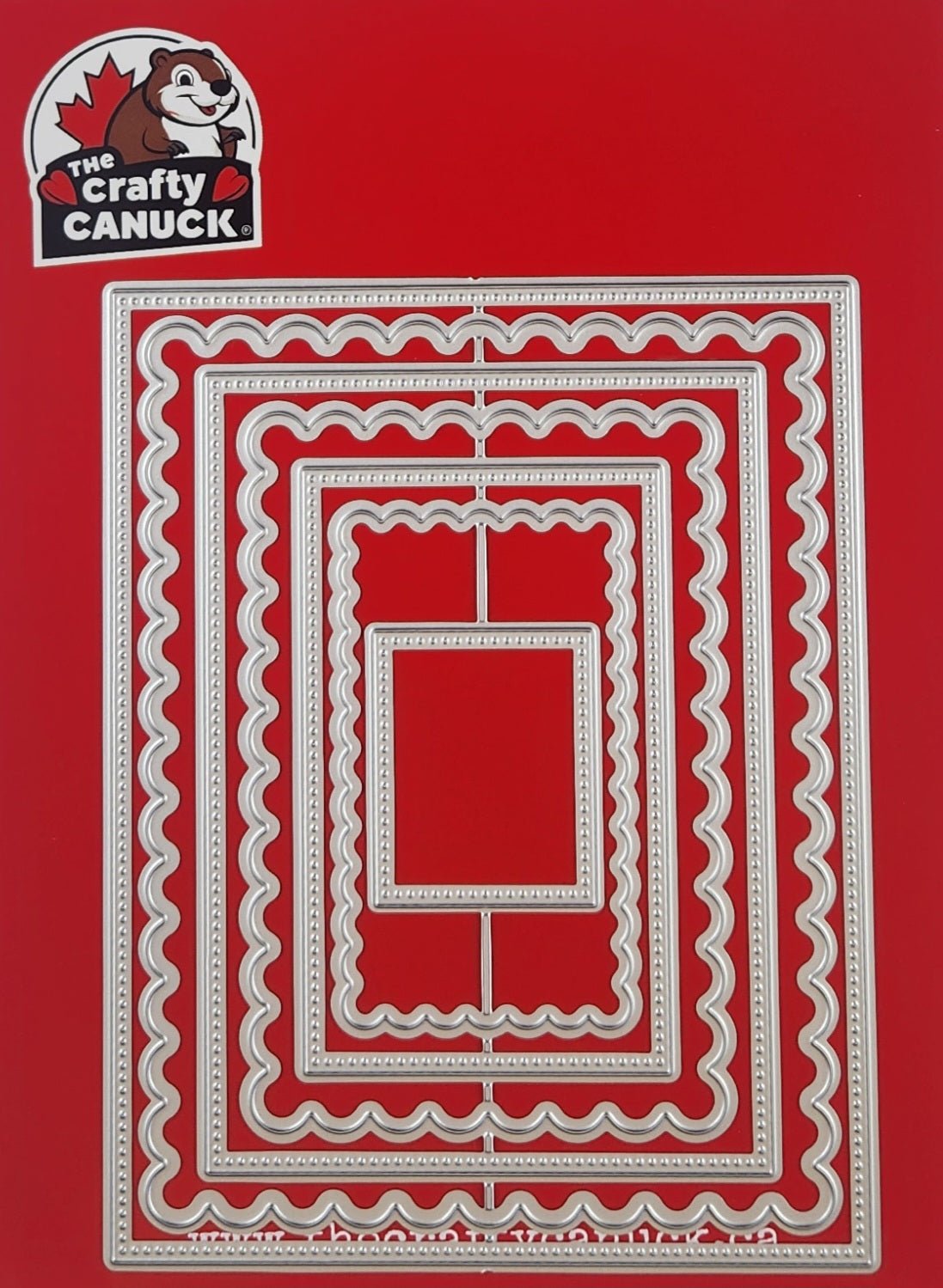
Pricing is also worth planning around. Our stitched and scalloped rectangle frame die is priced at $18.00, and our scalloped frames die is $9.00, so a few well-chosen dies can cover many seasons of cards without a large upfront spend.
Choosing Your Next Dies from The Crafty Canuck
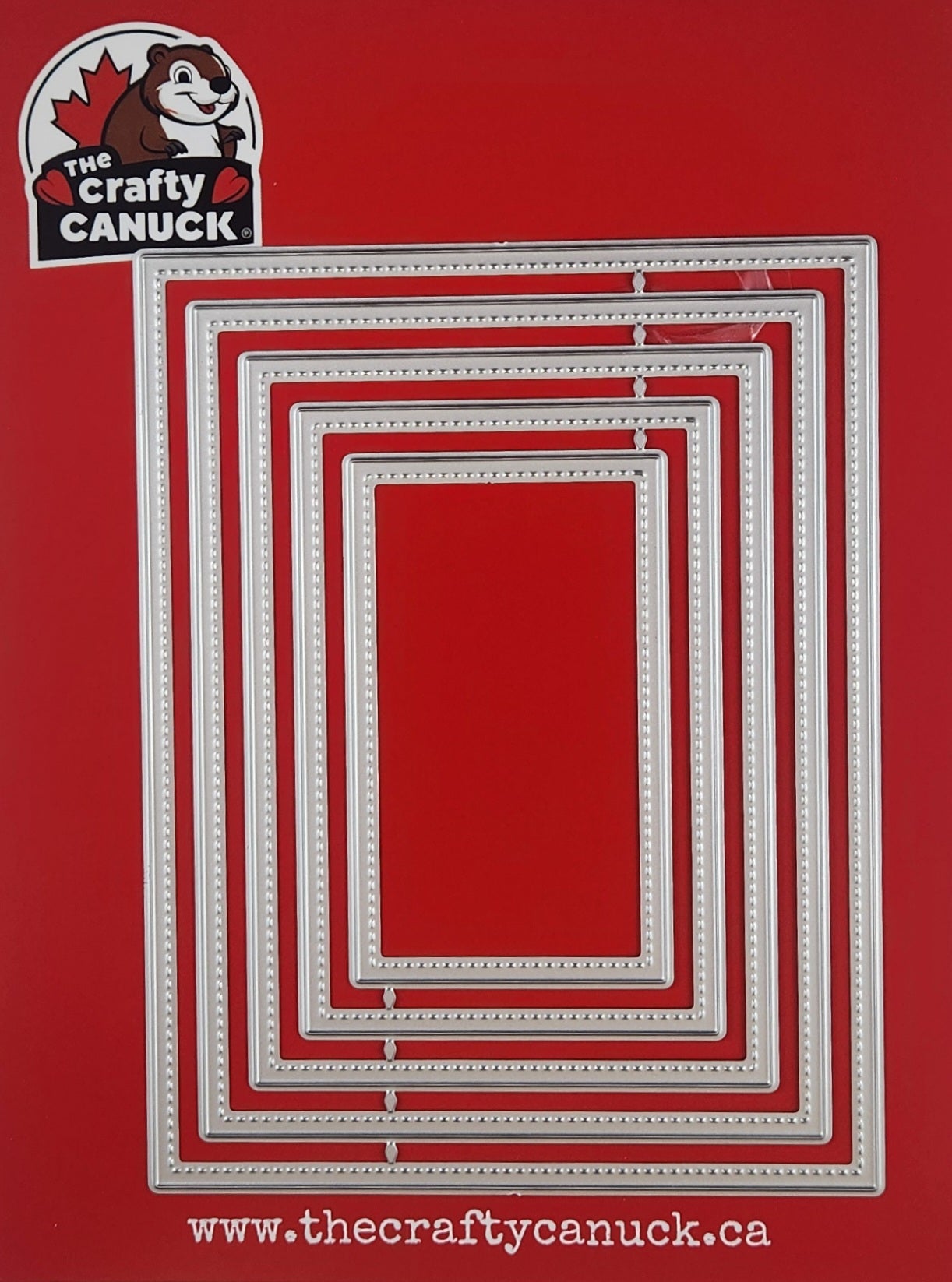
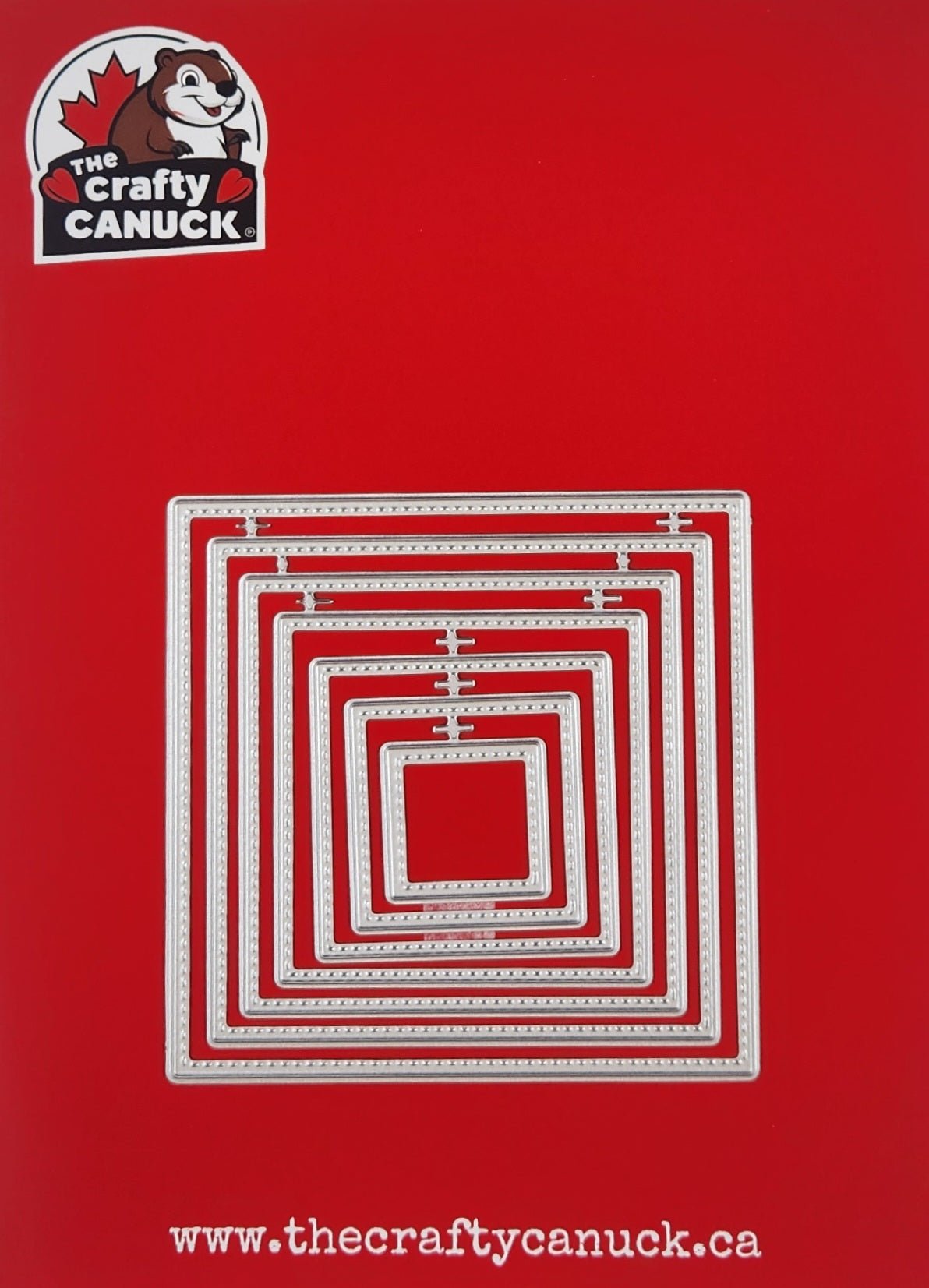
Now that you know how to check dimensions and quality, you can choose with confidence. Our stitched and scalloped rectangle frame die, priced at $18.00, suits birthday, holiday and seasonal cards. For a clean, simple frame, the stitched rectangle frames die is available at $18.00, and the stitched square frames die offers the same price for a different shape. If you want a softer edge for cards, the scalloped frames die is $9.00. For a versatile option that combines stitching and scallops, the stitched and scalloped rectangle frames die is priced at $18.00.
Frequently Asked Questions
How can you tell if a metal cutting die is good quality?
Look at the blade edge, the consistency of the steel-rule profile and how cleanly the die cuts a test piece of cardstock. Quality dies produce sharp, complete cuts with no gaps or fraying at corners. Check the material listing too, since carbon steel is a common choice for durability. Testing one shape on scrap cardstock before cutting a full project is the most reliable way to judge a die you have already bought.
Are metal cutting dies compatible with all die-cutting machines?
Not always. Die-cutting machine compatibility depends on the machine's pressure, platform size and whether it accepts steel-rule or thin metal dies in its carrier sheet or cutting plate setup. Check your machine's manual for supported die types and thicknesses before ordering. A die sized for a shorter platform may not fit a smaller machine, so confirm the dimensions against your cutting area first.
What is the difference between thin metal dies and steel-rule dies?
Thin metal dies are wafer-thin and suited to detailed designs and lighter materials such as paper and cardstock. Steel-rule dies are thicker and more robust, which makes them better for thicker materials and heavier production work. Your choice depends on the materials you cut most often and the machine you use. Both can produce clean, precise results when matched to the right material and pressure.
Why is my metal cutting die not cutting all the way through?
The most common causes are insufficient pressure, a worn or dull cutting edge, cutting material that is too thick for the die, or a die that is not seated flat on the cutting plate. Check your machine's pressure setting, confirm the die sits evenly, and test on a single sheet of cardstock. If the problem persists, run a second pass or inspect the blade for damage.
